20 Easy Reasons For Deciding On Anti-Termite Control Services In Jakarta
Wiki Article
Termite prevention strategies that span the entire Java Indonesia island. Java Indonesia
The expression "islandwide exclusion", which sounds like an ambitious infrastructure plan, is actually a biogeographic forensic practice employed by Jakarta anti-termite. Every building in this city is an ecological island surrounded by pavement, compacted fill as well as utility trenches. Coptotermes are able to traverse concrete drives of five meters in the Menteng villas based on the same principles as those that determined which termites returned to Krakatau after 1883. Exclusion does not mean poisoning termites everywhere in Jakarta. It's about engineering issues that make crossing impossible.
1. The best way to prevent poisoning is through sterilization
Quarantine is the sole method which has proven efficient in eliminating an entire island. This means heat treating infested wood taken from Jakarta homes during renovation. Chipping the wood infested with fungus and transferring it to the landfill doesn't end the colony but launches colonization rafts into the waste stream. Professional exterminators need to burn or kiln-heat any infested debris at the site.
2. Soil Chemistry may result in exclusion zones
Certain Indonesian islands are devoid of termites that feed on soil because their soils are too alkaline or nutritionally poor. Jakarta antitermite companies are able to replicate the condition locally. The pH changes under slabs and around the perimeters of foundations - with agricultural sulfur or buffered acid can create a soil that termites who grow fungus are unable to tunnel through. The soil does not have to be toxic. The soil does not need to be toxic.
3. Connectivity is the lifeline for the colony
SubterraneanTermites don't have individual invaders. Instead, they are a superorganism which is spread across the tunnels. Severing landscape connectivity--removing wooden fences that contact soil, replacing organic mulch with river stone, eliminating brush piles and timber debris--fragments the colony into isolated pockets that eventually starve. The island-wide exclusion begins at the property boundary, not the wall that forms the foundation.
4. Macrotermitinae isn't able to cross the pavement.
For their symbiotic garden, termites that grow fungus (Macrotermes Microtermes, Odontotermes ) need to be in contact with soil. Coptotermes continue to construct secure tubes in concrete, but fungus farmers aren't able to create satellite nests. A continuous vapor-barrier under the entire building excludes this entire guild of feeders forever.
5. The Port of Tanjung Priok Jakarta's Achilles Heel
Once infected wood enters the quarantine zone then the island's isolation falls in pieces. Pallets for shipping, decorative crates, furniture made from reclaimed wood and imported landscaping materials arrive in Jakarta daily through Tanjung Priok carrying Coptotermes gestroi and Nasutitermes colonies. Anti-termite businesses must examine every wooden item brought to the property, not only the structure that is standing.
6. Inclusion Infrastructure: Wood species is Exclusion Infrastructure
The local supply of timber in Jakarta is dominated by Acaciamangium and falcataria, as well as Heveabrasiliensis. The three species aren't durable and highly palatable for subterranean pests. To identify these species within the window jambs and door frames for structural repair it's the equivalent of installing a bait station that is disguised as an architectural. Incorporating prohibited species into construction contracts is a requirement to be excluded.
7. The gradients of moisture on Foraging highways are not a possibility to avoid.
Termites create mud tubes due to their cuticles dry out below 70 percent relative humidity. Every evaporative aspect that leaks, be it a leaking air conditioner, poorly graded beds, or a dripping garden water hose, results in a moisture profile that is an attractive feature. If moisture audits during the course of preventive inspections are not completed or not completed, the exclusion procedure fails.
8. Above-Ground colonies signify a perimeter breach
Coptotermes gestroi is a colony that has inhabited an island, when it builds nests of cardboard inside wall cavities or ceiling spaces. The colonies can live for years without access to soil. The exterminator must treat an aerial nest as though it were an infested, isolated island. This requires the complete enclosure with a fumigation.
9. Baiting Is Surveillance, Not Exclusion
Perimeter traps cannot exclude termites. They remove colonies within the area of the station. They serve as supplemental feed sites, and help to sustain colonies during dry periods that occur. To truly exclude them physical barrier, it is necessary to construct. These can be stainless steel meshes, graded stone or bonded sand membranes polymer sheets installed during construction.
10. The 1.6 million House Precedent
Between 1911 until between 1911 and Dutch colonial officials rebuilt or revamped 1.6 million Javanese homes in an unprecedented exclusion campaign aimed at bamboo constructions that were plagued. They succeeded in the face of epidemics, but culturally they were unsuccessful. Bamboo was banned, traditional housing stock destroyed, and the vernacular knowledge was eliminated. Jakarta's anti-termite services should be aware that elimination is the result of exclusions enforced without consent. Homeowners must be aware of the exclusion method and stick to it.
Conclusion
Chemical application schedules are not sufficient to eliminate termites from a whole island. It is accomplished through the manipulation of habitats and physical barrier installation, and the intentional engineering of inhospitable soil chemistry. Krakatau's eruption proved that strict quarantine as well as complete sterilization could result in the elimination of termites on a 100-year-scale. Jakarta's anti-termite services can't replicate the volcanic eradication. However, they can apply every lesson that was learned by island biogeography. Termites can cross the water using floating wood. They can also cross the paving along the edges of concrete. They cross the property line using organic mulch. Exclusion is the discipline of removing all vessels that are available. View the best jasa pembasmi rayap for website recommendations including cara basmi rayap, pest control jakarta selatan, pest control jakarta selatan, perusahaan pest control, bahan lemari anti rayap, kitchen set anti rayap, rayap rumah, rayap pekerja, rayap lemari, cara membasmi rayap kayu and more.
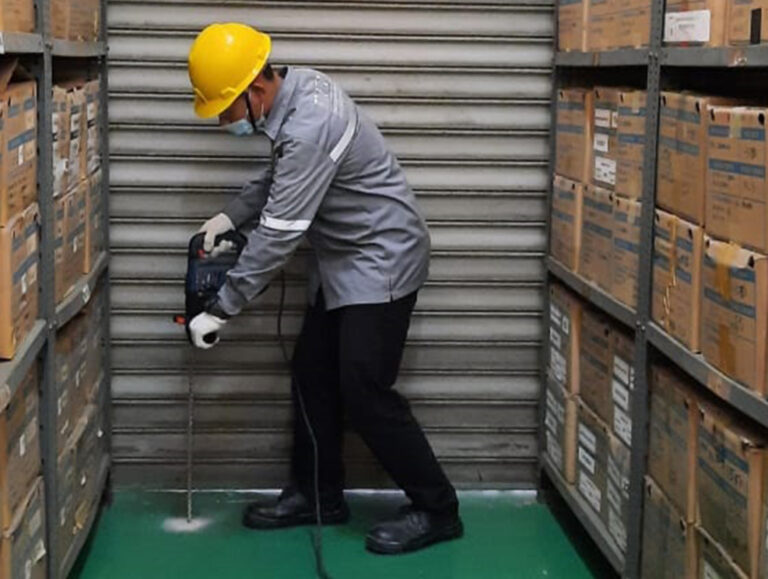
Baiting Above-Ground For Asian Subterraneans, Jakarta
Many Jakarta homeowners believe termite baiting means plastic stations buried in the garden. They are checked every few months by a technician who peers into the garden, shrugs and moves on. This is monitoring the perimeter and not destruction of colonies. Baiting above-ground is an entirely different discipline. The bait station won't be buried. Instead it will be locked to an active mud tub or pressed against the damaged area. The bait is not hidden and is inserted directly into termites' daily commuting route. For Asian subterranean species--Coptotermes gestroi, Coptotermes curvignathus, Microtermes insperatus--above-ground delivery bypasses every behavioral barrier that makes perimeter baiting slow and uncertain. Jakarta anti-termite service vehicles that do not have above-ground stations are equipped only to check, not treat.
1. Above-Ground Stations require active infestation
Termites do not know about bait stations until they locate them. Above-ground baiting relies upon confirmation. Stations are only deployed following the discovery of mud tubes or damaged wood. This isn't a limitation, but a measure of efficacy. No plastic will be buried under sterile soil. There is no need to waste technician time in stations that won't be struck.
2. The Mud Tube Becomes Delivery Infrastructure
Above-ground stations are able to complement existing termite construction. The base of the station is sealed to seal the entrance to the mudtube. Termites that pass between nest and feeding area pass through the station. They come across the bait matrix, eat it, and then continue their route. The tube remains in place. The patterns of commuting aren't disrupted. The colony poisons its own infrastructure.
3. For Above-Ground Deliveries Test for Palatability Is Different
The colony is already familiar with the smell of wood that has been taken away. The location of the feeding is able to be verified. Above-ground matrices of bait need only be suitable. They are not the most attractive. The formulation is slack and toxicants can be included which are less effective, which would otherwise be discarded due to their competition with the adjacent untreated wooden surfaces. Jakarta exterminators should have several bait formulations and select based on the feed preferences at the infestation site.
4. Recruitment Multiplier with Self-Seeding
The feeding of termites immediately starts when live termites taken from the infested logs are put into the aboveground station's recruiting chamber. The termites that are introduced have already become familiar with local environmental conditions such as foraging rhythms and nestmate recruitment, begin consuming the bait and recruiting others nestmates by using trophallaxis. This straightforward action increases the amount of toxicants released approximately 30 percent. The termites killed by exterminators by scraping off wood damaged are destroying biological resources.
5. Coptotermes verstroi reacts quickly to above-ground placement
Coptotermes gestroi and other Asian subterranean Termites maintain a high rate of foraging all through the entire year. Above-ground stations that are installed on active infestations typically show feeding in 48 hours, and measurable bait consumption in one week. The timelines for eliminating colonies are compressed from months to a few weeks. The companies that offer timeframes of six months are either using inadequate matrixes or have not been able to recruit termites.
6. The macro and micro terms require a different places for them.
Fungus-growing termites (Microtermesinsperatus Macrotermesgilvus) However, they do create large mud tubes in a different manner than Coptotermes. Their search for food above ground is less diffuse and they usually cover their feeding areas within the wood. Above-ground baiting is required to fight the species. This requires the excavation of damage sites and their introduction into the food chambers of the matrix, and careful sealing. The shape of the station differs. Jakarta exterminators that attempt Coptotermes strategies against Microtermes infestations might observe a lower uptake.
7. Moisture Conditioning Is Non-Negotiable
Above-ground bait matrixes for the fish are produced at certain water activity levels. Jakarta's relative humidity is the reason for the exchange of moisture. Bait that is stored in your toolbox of the vehicle for a few weeks dehydrates; bait left out on the ground, exposed to humidity from the atmosphere and without packaging, may be ruined. The exterminator needs to fill the bait cartridges before placing them in place, and should also protect any unused stocks from the constant humidity of Jakarta.
8. Inspection Frequency Compresses
Programs for perimeter baiting are built around inspection cycles of quarterly or semi-annual. Above-ground baiting takes place on a weekly cycle. Infestations that are acute consume the bait very quickly. The cartridges that have been depleted must be replaced as quickly as is possible, and not within months. The colony's elimination is confirmed after the feeding ceases and mud tubing desiccates. The companies that have above-ground monitoring checks within their perimeter monitoring program will be able to detect a decrease in bait. They may assume treatment is progressing and may fail to observe the time for colony recovery.
9. Warranty Underwriting Requires Different Types of Insurance
The price of a guarantee for baiting at the perimeter is contingent on the number of stations as well as the frequency at which they are checked. Above-ground baiting warranties are based according to species detection, the extent of infestation, and structural complexity. Standard rates apply to a single Coptotermesgestroi colony which enters the area through a threshold. A multi-colony Microtermes infestation distributed across the entire ground floor will require different risk modeling. Jakarta anti-termite services which apply a uniform warranty price to both scenarios are mispricing the risk.
10. Above-Ground is Diagnostic, Not just Therapeutic
Data on colony health as well as foraging range and the ratio of caste is gathered by monitoring the amount of bait consumed as well as the number of termites at the stations. Consumption is high in colonies that are stressed by resources. Abandonment and consumption indicate colony elimination or bait aversion. Mud tubes that have darker colors suggest less traffic. If trained to recognize the signals, pest control professionals can alter treatment parameters in real time. Exterminators who merely swap cartridges and leave are underutilizing the most information-rich treatment option in termite control.
Conclusion
Above-ground detection of Asian subterraneans by inspection companies is not a second-class service. This intervention is what distinguishes colony removal specialists from inspection companies. Perimeter baiting monitors. Above-ground baiting provides pleasure Perimeter baiting is waiting for discovery. Engineers come across above-ground baiting. Perimeter baiting results in quarterly service tickets. Above-ground encapsulation results in definitive colony removal, and renewal of warranty that follows. Jakarta anti-termite treatments which delay the implementation of above-ground protocols usually cite equipment cost and technician training needs. These aren't obstacles and are actually an investment. The cost of the equipment is recouped within the first 3 above-ground deployments. The investment in training pays off when technicians progress from being generalists into specialists. Multiple bait matrixes differentiate high-end service providers from commercial exterminators. Homeowners with termite infestations that are active don't want monitoring of their perimeters. They do not want surveillance of their perimeter. Above-ground baiting is the quickest way to get there. Jakarta exterminators work every day cleaning tubes, injecting soil and not deploying above ground stations. This lets the colony continue to feed. Take a look at the top rated anti rayap for website info including pembasmi rayap, jasa anti rayap jakarta, jasa rayap, pest control harga, pest control harga, kayu tahan rayap, jasa anti rayap, rayap kecil, rayap lemari, cara membasmi rayap and more.
